


Fossils from the Lithographic Limestone
Fascinating Solnhofen Limestone Fossils
The Solnhofen lithographic limestone is one of the most important fossil Lagerstätten of the Upper Jurassic worldwide. The fine-grained carbonate slabs formed during the early Tithonian, around 150 million years ago, in a shallow, lagoon-like island environment at the margin of the Tethys Sea. Highly saline and often oxygen-depleted basin conditions meant that, after death, organisms were hardly decomposed and were rapidly buried by fine lime mud.
These exceptional depositional conditions enable extraordinarily detailed preservation. In addition to complete skeletons, delicate structures such as insect wings, skin outlines, soft-tissue impressions, and feather structures are frequently found. The formation is particularly famous for the early bird Archaeopteryx, whose discoveries play a key role in understanding the evolution of birds from theropod dinosaurs.
Another crucial factor for the scientific relevance of these fossils is their preparation. Through careful mechanical and, in some cases, chemical preparation techniques, details can be revealed that usually remain hidden in contemporaneous fossils from other localities. Fine structures such as delicate bristles, muscle attachments, skin remains, or even microscopic surface features can be exposed. As a result, these finds gain not only aesthetic but also significant scientific value, providing insights that go far beyond the usual level of fossil preservation.
For collectors and paleontologists alike, the Plattenkalk is also remarkable due to its broad taxonomic diversity. In addition to various reptiles and numerous fish species, a wide range of crustaceans, cephalopods, insects, echinoderms, mollusks, and plant remains occur regularly. Many specimens are fully articulated and, due to the preservation of the finest structures, are both aesthetically and scientifically highly valuable.
Important fossil sites are located around Solnhofen, Eichstätt, Mörnsheim, Schamhaupten, and Daiting. Although geologically closely related, the individual quarries differ significantly in their fossil assemblages and preservation quality. Some localities are known for particularly well-preserved fish, others for rare vertebrates or a high diversity of crustaceans and insects.
It is precisely this combination of depositional environment, exceptional preservation, and locally differentiated fossil communities that makes the Solnhofen lithographic limestone one of the most fascinating sources of Jurassic fossils – both for scientific research and for discerning collections.
Pterodactylus antiquus
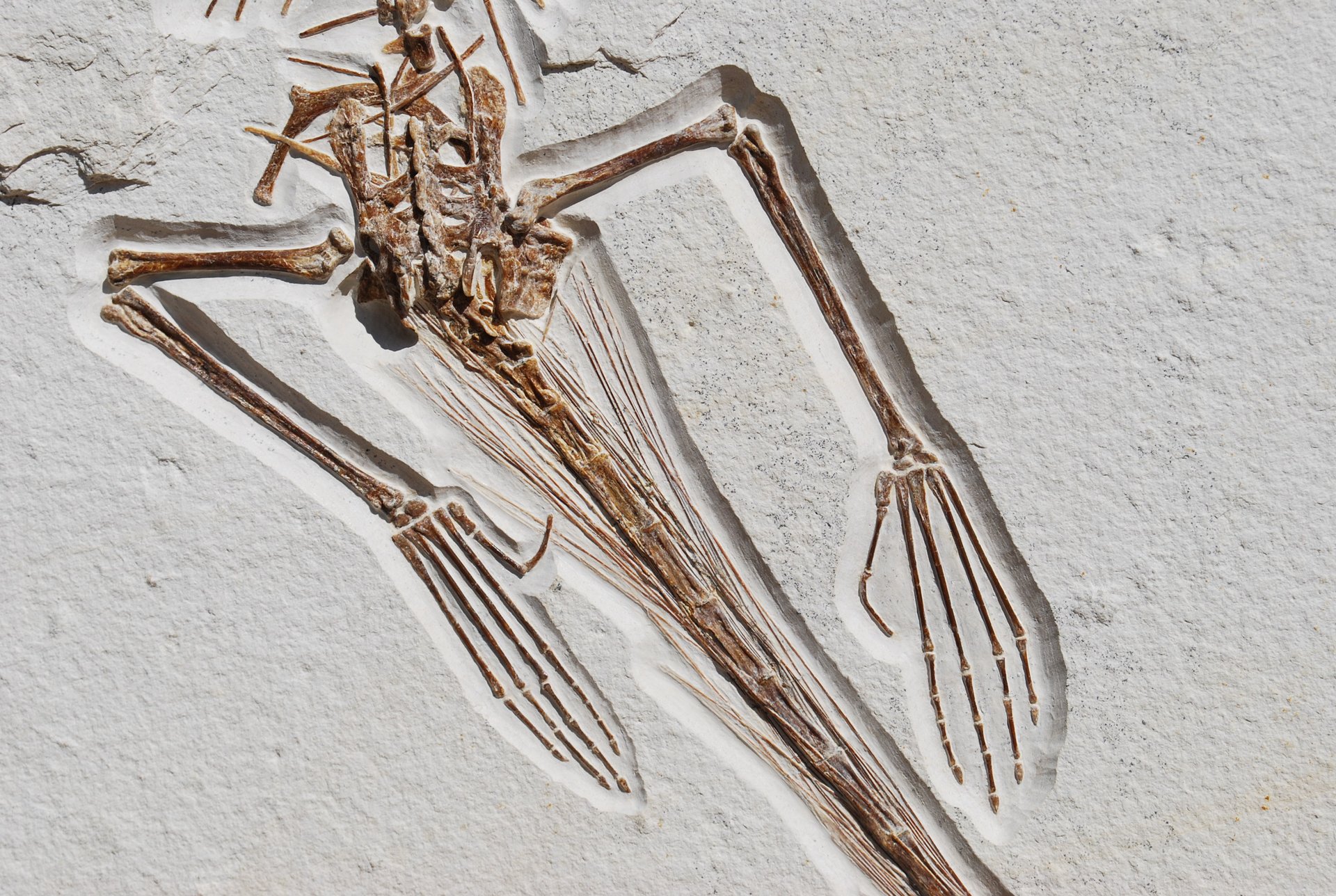
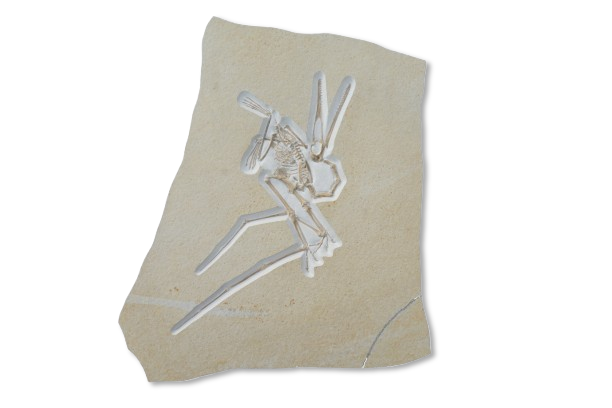
Finds of pterosaurs in the lithographic limestones of the Altmühlalb are always among the great rarities. Nevertheless, a number of species belonging to different genera have already been discovered there, some of them in exquisite preservation. In certain finds, even soft tissues such as wing membranes, webbing between the toes, remains of hair-like structures, or stomach contents have been preserved.
The fossil shown here of the short-tailed pterosaur Pterodactylus antiquus from Solnhofen in the Altmühl Valley was part of a private collection for several decades. It exhibits excellent three-dimensional preservation of the bones, as well as the typical post-mortem stretching of the neck caused by muscle contraction after the animal’s death.
Following preparation using modern techniques, it has become an exceptionally attractive collector’s specimen. This piece has already found a new owner; however, if you are interested in a pterosaur fossil, we would be pleased to hear from you at any time.
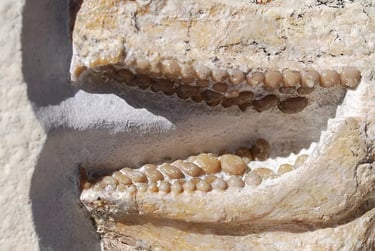
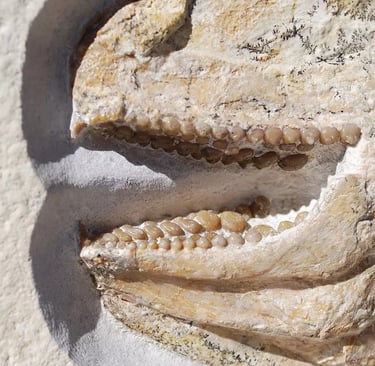
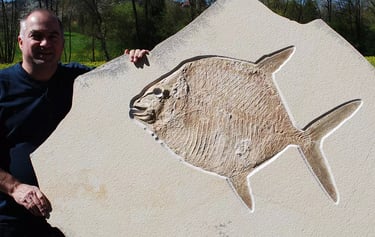
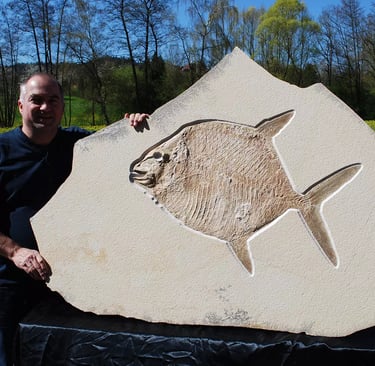
Gyrodus circularis
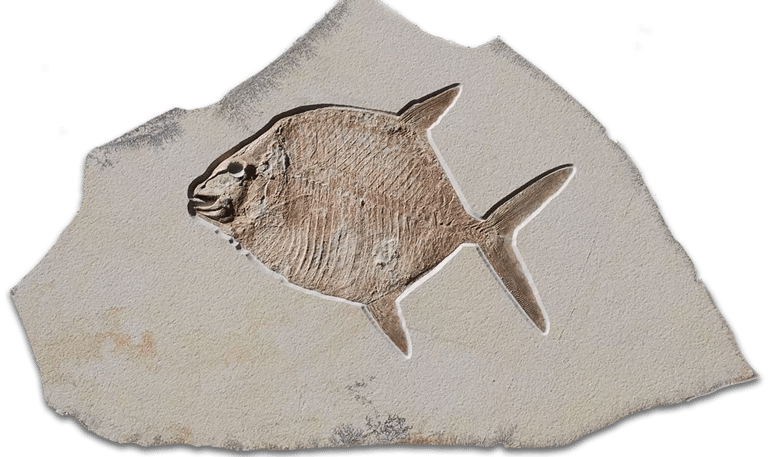
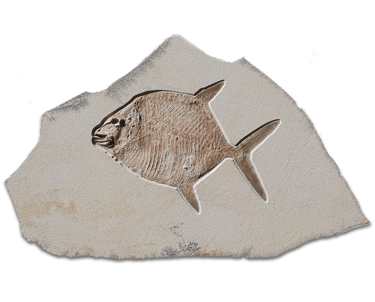
This particularly large and decorative ocean sunfish Gyrodus circularis originates, like most finds of large sunfish, from the Upper Jurassic of Solnhofen. At this size, the perfectly preserved crushing dentition is especially impressive, adapted for breaking hard-shelled prey. These animals are believed to have fed on mussels, snails, corals, and ammonites.
In one specimen, two large Laevaptychi were even found within the abdominal cavity, suggesting the ingestion of a large ammonite, most likely Aspidoceras or Gravesia. As quarrying activity in the Solnhofen lithographic limestone region has been greatly reduced in recent years, no further new finds of large pycnodont fishes have been reported recently.
The specimen shown here has already been sold, but from time to time a comparable piece may become available from the liquidation of a private collection.
This specimen has already been sold.
This specimen has already been sold.
Pleurosaur
This specimen has already been sold.
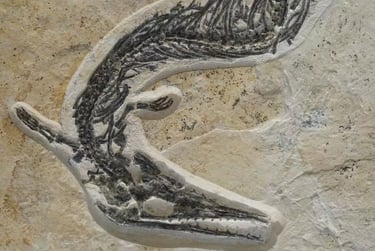
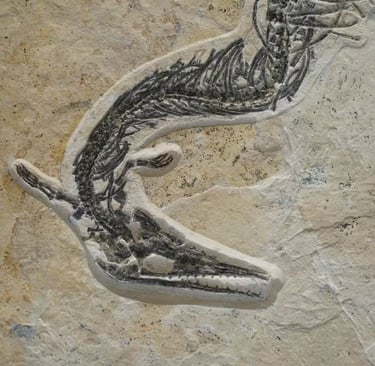
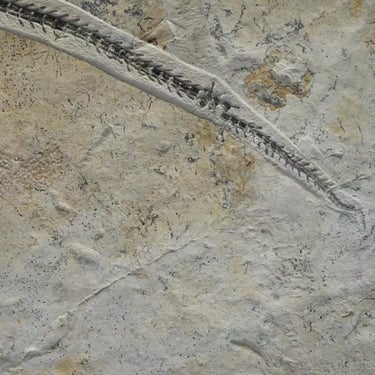
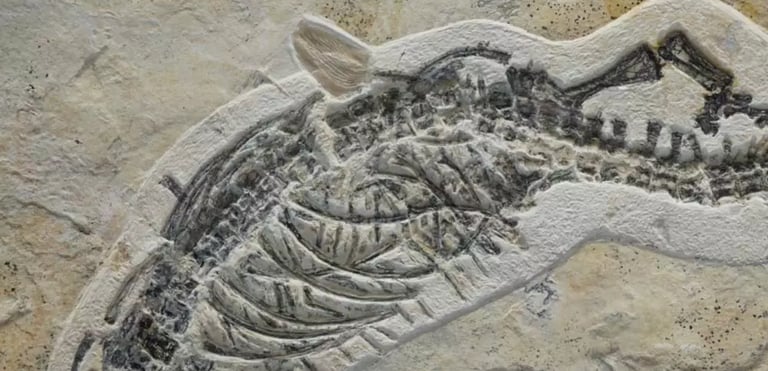
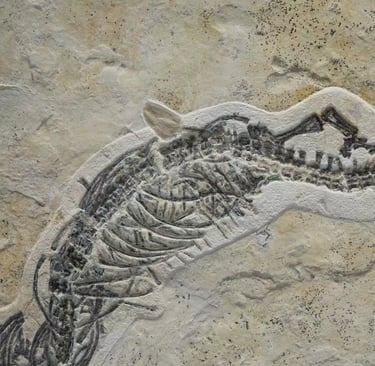
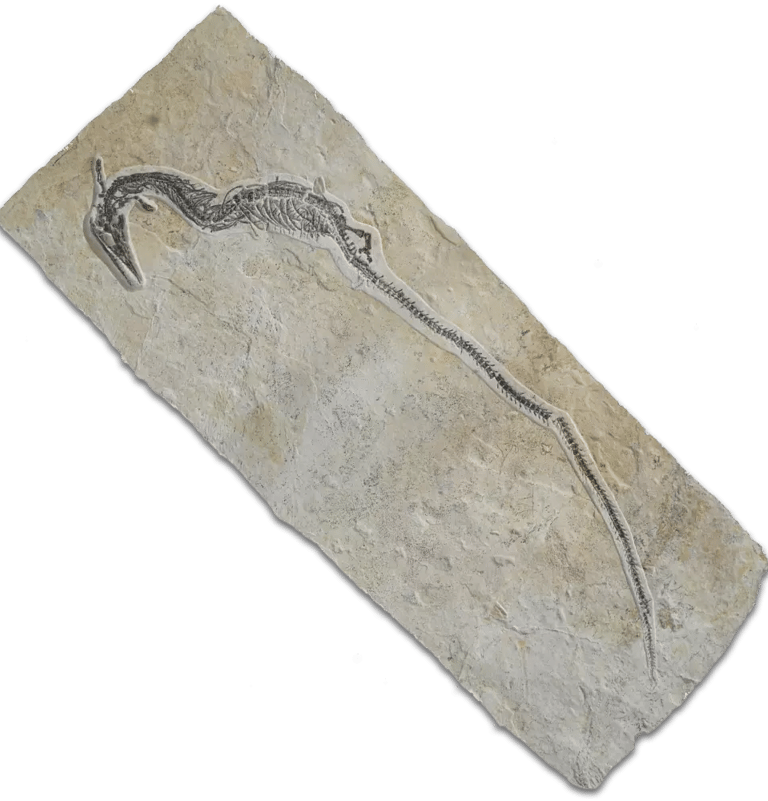
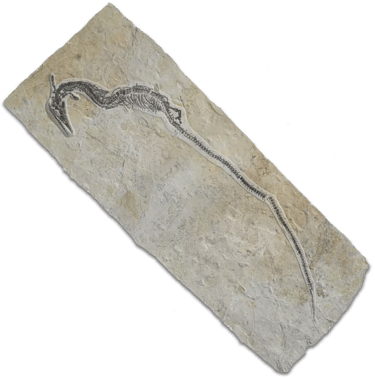
This is a complete specimen of the very rare snake-like reptile Pleurosaurus sp. from the uppermost Solnhofen beds of the Solnhofen lithographic limestone, showing an unusually dark bone preservation. It is likely even the only complete specimen discovered in these strata.
Pleurosaurs were a group of rhynchocephalians (Sphenodontia) that were almost perfectly adapted to an aquatic lifestyle, in which the limbs were reduced in favor of an elongated tail. They may even represent distant “ancestors” of modern snakes, although the skull anatomy shows clear differences.
The specimen shown is available for purchase – please feel free to contact us if you are interested.
Contact
If you are interested or would like to know the price of a comparable specimen? Simply leave your contact details here and we will get back to you as soon as possible.
Contact
Eurofossils
Dr. Martin Görlich
Tel: +49 (0) 171 – 894 21 84
Email: eurofossils@web.de
Copyright © 2026 eurofossils